
The Transformative Impact of Quantum Computing on Interactive Entertainment
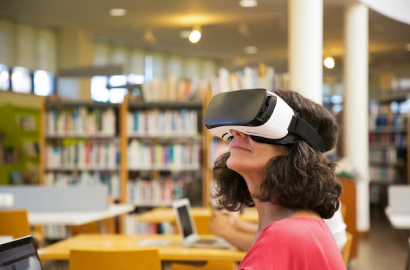
As we stand at the cusp of a technological revolution, the convergence of quantum computing and digital entertainment offers a glimpse into a future where immersive experiences are transformed by unprecedented computational power. Industry leaders and researchers are increasingly exploring how the principles of quantum mechanics could redefine the boundaries of interactive gaming, virtual reality, and digital storytelling. This exploration isn’t merely speculative; it is underpinned by significant advancements and ongoing research that highlight the potential of quantum technologies to leap beyond classical limitations.
Quantum Computing: From Theoretical Foundations to Practical Promise
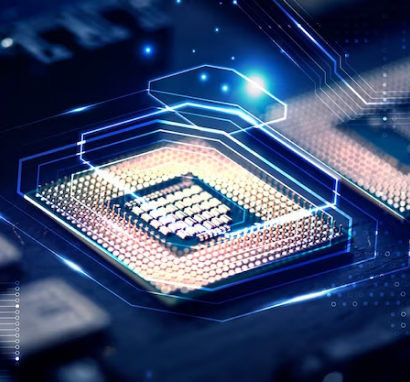
Quantum computing leverages the phenomena of superposition and entanglement to perform complex calculations at speeds unattainable by classical computers. Companies like IBM, Google, and D-Wave have made substantial strides, developing functional quantum processors with qubit counts now surpassing 100 qubits. For example, Google’s 53-qubit Sycamore processor demonstrated ‘quantum supremacy’ in 2019, showcasing the potential for solving specific problems exponentially faster than classical counterparts.
These breakthroughs open the door to tackling computationally intensive tasks in real-time environments, such as rendering detailed virtual worlds or simulating neural networks for adaptive AI behaviors. With the capacity to process vast, complex data sets rapidly, quantum computers could revolutionise the interactive entertainment industry—delivering new levels of realism, responsiveness, and narrative complexity.
The Intersection of Quantum Computing and Interactive Entertainment
The gaming sector has always been a fertile ground for innovation, often serving as a testing bed for cutting-edge technology. Currently, the integration of quantum processing is largely experimental but promising. For example, quantum algorithms could optimize rendering processes, significantly reducing latency and enabling photorealistic graphics in live environments.
Furthermore, quantum-enhanced AI algorithms might facilitate emergent storytelling—where narrative pathways evolve dynamically based on player actions, yielding uniquely personalised experiences with each playthrough. This level of adaptability benefits from quantum’s ability to explore multiple possibilities simultaneously, enhancing procedural generation and decision-making algorithms.
| Application Area | Impact | Industry Examples |
|---|---|---|
| Real-time Graphics Rendering | Enhanced realism, reduced latency | Research prototypes using quantum algorithms for ray tracing |
| Procedural Content Generation | Dynamic, unique worlds each session | Quantum-inspired AI for environment creation |
| Player Behaviour Modelling | More authentic NPC interactions | Advanced AI systems utilizing quantum optimization |
Challenges and Opportunities
Despite the immense promise, integrating quantum computing into entertainment faces significant hurdles. First, the hardware is still nascent, with qubits highly susceptible to decoherence and operational errors. Building scalable, fault-tolerant quantum systems remains a technical challenge.
“Quantum supremacy is one milestone, but practical, fault-tolerant quantum computers are the real goal as they will enable real-world applications in entertainment and beyond.” — Dr. Alice Monroe, Quantum Computing Expert
On the other hand, hybrid classical-quantum algorithms are emerging as a practical pathway, wherein quantum processors assist classical systems to solve specific sub-tasks more efficiently. This symbiosis can accelerate the development of immersive digital experiences without waiting for fully scalable quantum hardware.
Furthermore, collaborations between quantum research firms, game developers, and AI specialists are paving the way for early-stage prototypes and feasibility studies. Staying informed about this nascent yet evolving field is vital for industry stakeholders aiming to remain at the forefront of digital entertainment innovation.
Deepening the Understanding: A Resource for Interested Innovators
For those keen to explore the cutting-edge developments, a recent initiative offers valuable insights into the intersection of quantum computing and digital entertainment. Developers, entrepreneurs, and researchers can visit site here to discover advanced applications, technological frameworks, and collaboration opportunities that are shaping this frontier.
Note: This resource provides comprehensive overviews, case studies, and technological analyses valuable for industry practitioners and academic researchers alike, emphasizing responsible integration and future-proof strategies.
Conclusion: Charting the Quantum Frontier in Gaming
Quantum computing stands poised to redefine not only how we process information but also how we create immersive, dynamic entertainment. Its potential to revolutionise rendering, AI, and procedural generation suggests a future where digital worlds are more vivid, responsive, and deeply personalised than ever before. While significant technical challenges remain, ongoing research and strategic partnerships are paving the way for practical applications in the coming decades.
For industry leaders and innovators eager to understand and harness these emerging trends, exploring authoritative sources—such as the platform referenced here—are critical steps toward future-proofing their technological and creative initiatives. Embracing the quantum revolution now could position early adopters at the forefront of an entertainment paradigm shift.